


Bringing clean energy to rural areas benefits the present and yields lasting rewards for future generations.
Yiwu is not only the starting point of the Ancient Tea Horse Road but also the premier town of China’s tribute tea. With a heart full of reverence for history and a deep sense of sacredness, I finally set foot in this long-cherished holy land—Yiwu.
We traveled in silence the whole way, with the scenery unfolding before our eyes. The beads of sweat on the driver’s forehead spoke volumes about how arduous the journey was. Strangely enough, I didn’t feel carsick at all—could it be the oxygen-rich air, or perhaps the anticipation welling up inside me? “Dada dada…” … “The roar and the acrid black smoke, mingled with a faint scent of burning wood, jolted me awake. ‘We’re almost in Yiwu,’ the driver said with a smile. Yet I couldn’t help but wonder: where are the moss-covered stone paths? Where’s the curling blue smoke? Where are the little bridges, flowing streams, and quaint homes?”


The anticipation in my heart felt as though it were being erased, like a rubber eraser gliding across a page. Holding the tea freshly brewed by my host, my mind wandered in countless directions—until I suddenly realized just how sentimental I had become. Shaking my head to steady myself, I gathered my thoughts and made my way to the venue. Today, I had been invited to attend the “Mengla County Clean Energy Promotion Training Conference,” hosted by the Mengla County Forestry Bureau. The conference focused on replacing firewood with liquefied petroleum gas as the fuel for tea-fixing, a shift aimed at promoting clean energy. This brief introduction helped ease the melancholy I’d been feeling earlier. “Where do eco-friendly tea gardens and ancient-tree teas come from? Without lush green mountains and clear waters, such aspirations are nothing but wishful thinking,” said Vice County Magistrate Chen Hui. Looking at tea production and processing across the country, we see that liquefied petroleum gas has already been used as fuel for more than a decade—yet here in Xishuangbanna, people are still cutting down forests to dry their tea, destroying the hard-earned legacy of our ancestors and burning away the very home of our future.


Liu Rong, manager of the Xishuangbanna Petrochemical Group, spoke with a look of deep concern on his face: “My worry is not that no one will want our equipment; my real concern is how much longer this legacy left by our ancestors will endure—and whether the sky here can remain so blue.” According to incomplete statistics, Mengla County consumes 6,640 cubic meters of firewood each year for tea processing. To protect this green oasis, we must intensify publicity and promote the use of liquefied petroleum gas as a clean energy source, thereby reducing the consumption of forest resources. By popularizing clean-energy technologies, we can help tea farmers shift their traditional mindsets, restructure their fuel-use patterns, and improve environmental hygiene. Specifically, replacing firewood with liquefied petroleum gas in tea-processing techniques will not only preserve our lush mountains but also do our utmost to sustain our existing ecological resources. The widespread adoption of clean energy can significantly curb deforestation and tree-felling, while simultaneously lowering both labor and economic costs in rural areas and reducing the environmental pollution caused by burning wood—making it a truly win-win initiative.
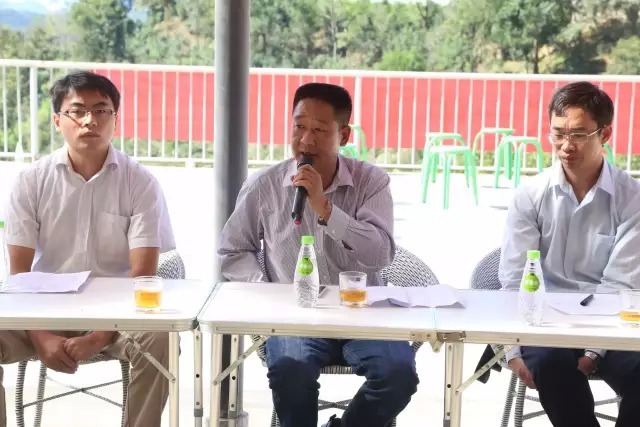
He Zhigang, Director of the County Forestry Bureau, stated, “It is indeed challenging to overhaul our traditional production and processing model; however, we must first effect change at the level of mindset and ideology to overcome these obstacles.” He further announced during his on-site address that the state will provide subsidies for clean-energy equipment: a subsidy of RMB 5,000 per drum-type fixation machine and RMB 500 per household fixation furnace.
Enterprises, primary processing facilities, and tea farmers attending the meeting have all eagerly signed up to install the equipment. After all, winning the people’s hearts is the very foundation of ecological conservation—once again, I seem to see those moss-covered stone paths, little bridges, flowing streams, and quaint homes!
Key words:
Previous:
Quick Navigation
Contact Information
Address: No.73 Mengli Avenue, Jinghong City, Xishuangbanna Prefecture, Yunnan Province
Telephone:(86) 0691-2152438
Fax:(86) 0691-2152439
Liquefied gas service hotline:0691-2155777
Drinking Water Service Hotline:0691-2211777

SAF Coolest v1.3.1.2 设置面板 SJDSD-ZRAV-WSZDE-AXE
无数据提示
Sorry, the current column is being updated, please look forward to it!
You can view other columns or returnHome Page