


Using liquefied petroleum gas instead of firewood for tea production benefits future generations.
Using liquefied petroleum gas instead of firewood for tea production to protect forests.
In recent years, Jinghong City, Pu’er The tea industry has grown rapidly, becoming an important avenue for increasing farmers’ incomes and helping them achieve prosperity. However, the predominant use of firewood as an energy source in tea processing has led to indiscriminate logging, undermining soil and water conservation and hindering forestry ecological development. In response, the Xishuangbanna Petrochemical Group has actively promoted the use of liquefied petroleum gas as a substitute for firewood in tea production, facilitating a transition from traditional charcoal-fired tea processing to low-carbon, eco-friendly methods. This approach not only protects the ecological environment but also elevates the standards of tea processing, effectively preserving the region’s lush mountains and clear waters and advancing green development.
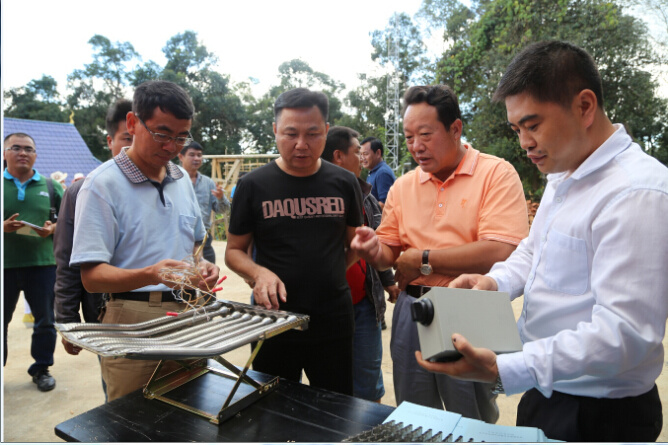
Explanation of Equipment Functionality to Municipal Party Committee and Municipal Government Leaders
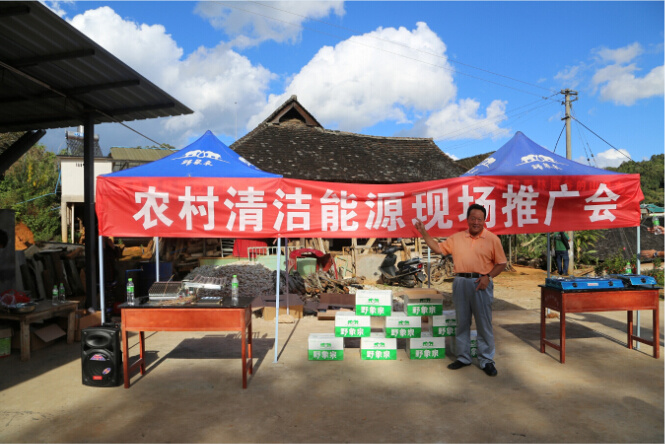
Where there are forests, there is water; where there is water, there are fields; and where there are fields, there is grain.
On November 15, Jinghong City held a field demonstration and promotion event in Mengsong Village, Menglong Town, to promote the use of liquefied petroleum gas as a substitute for firewood in tea frying. At the on-site meeting, leaders of the Municipal Party Committee and the Municipal Government stated: “Replacing firewood with liquefied petroleum gas in tea production not only benefits the local people but also helps preserve the forests and reduce illegal logging. After all, tea grown in deforested areas simply cannot retain its original flavor.” Promoting the clean development and utilization of rural energy not only benefits farmers today but also brings lasting benefits to future generations. If all Tea-producing townships across the state Popularization can truly be called a feat for the ages.
Every year during the tea-picking season, the fragrant aroma of tea lingers far and wide, and the “spectacular” sight of curling smoke rising from chimneys is a common sight on the tea hills throughout Xishuangbanna. Using liquefied petroleum gas for pan-firing tea not only reduces the labor required to gather firewood and tend the flames, but also keeps the cooking surface clean and hygienic; moreover, the heat can be easily controlled, resulting in more uniform and stable color and flavor in the tea leaves and a marked improvement in the quality of the processed tea. “Liquefied petroleum gas-powered tea-frying pans are pollution-free and convenient to use—once they’re widely adopted, we’ll welcome them wholeheartedly, while at the same time protecting our hometown’s lush mountains and clear waters,” said Liu Tian, Chairman of the Xishuangbanna Petrochemical Group. “Where there are forests, there is water; where there is water, there are fields; where there are fields, there is grain; and with grain comes a better life for ordinary people. By preserving our green mountains and clear waters…” Benefit future generations “Green mountains and clear waters are the very foundation.”
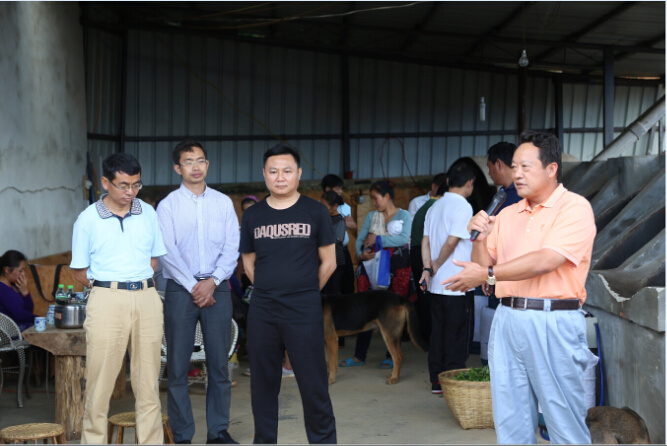
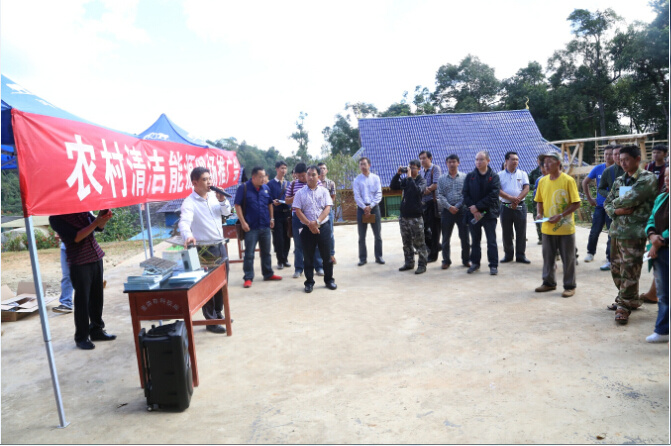
Protect the forests, benefit future generations.
Currently, among the 56,600 farming households in Jinghong City, more than 40,000 still rely on firewood for their daily production and living needs. Moreover, over 99% of tea-processing factories, primary tea-processing facilities, tea-processing stations, and individual tea farmers continue to use firewood in the tea-production process, with only a very small number of primary processing facilities having switched to gas-fired drum-type fixation machines. According to surveys, in 2014 alone, tea processing in Jinghong City consumed 109,000 metric tons of firewood, equivalent to a forest stock volume of 309,200 cubic meters—roughly the result of logging 52,400 mu of forest. Adding to this the firewood used by local residents for everyday household purposes (estimated at 4 cubic meters per household, or about 25,000 mu for 40,000 households), the total area of forest destroyed amounts to approximately 77,400 mu. Such a high rate of forest resource consumption relative to the value derived from it poses an enormous challenge and pressure on maintaining ecological balance and protecting forest resources. Therefore, it has become both urgent and imperative to promote and popularize the widespread use of liquefied petroleum gas as a substitute for firewood in tea production throughout the city. We must rise to the occasion, look far ahead, and press forward with all our might to achieve tangible results. With unwavering resolve and firm confidence, we must carry out this undertaking in a solid and sustained manner, so as to benefit future generations.
Key words:
Quick Navigation
Contact Information
Address: No.73 Mengli Avenue, Jinghong City, Xishuangbanna Prefecture, Yunnan Province
Telephone:(86) 0691-2152438
Fax:(86) 0691-2152439
Liquefied gas service hotline:0691-2155777
Drinking Water Service Hotline:0691-2211777

SAF Coolest v1.3.1.2 设置面板 SJDSD-ZRAV-WSZDE-AXE
无数据提示
Sorry, the current column is being updated, please look forward to it!
You can view other columns or returnHome Page