


Xishuangbanna Petrochemical Group’s Liquefied Petroleum Gas Storage and Distribution Station Conducts “Work Safety” Training
“Safety first, prevention paramount”; “Hidden dangers are more perilous than open flames; prevention is better than disaster relief; safety is heavier than Mount Tai”—these principles constantly serve as a wake-up call to every employee, ensuring that the word “safety” is deeply etched in the heart of each one. We continuously refine and implement safety measures... Assume full responsibility for production safety, strengthen safety training and education for frontline workers, and reinforce safety management to ensure the smooth implementation of all tasks.
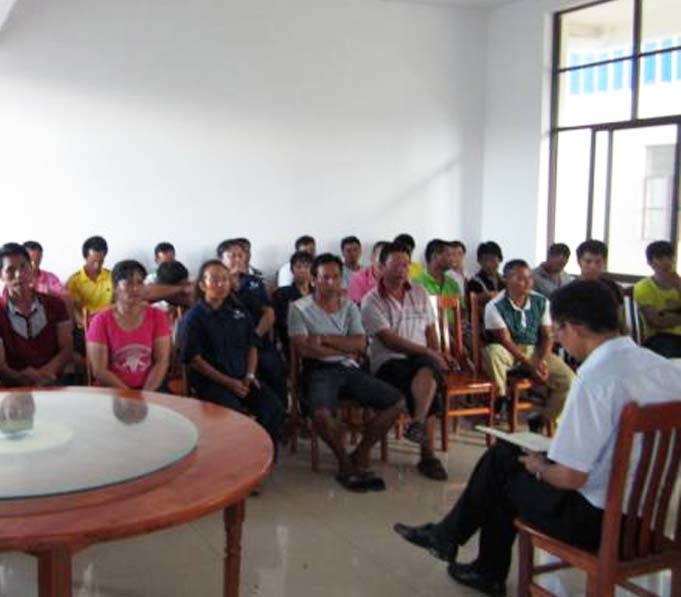
On the evening of September 3, under the chairmanship of Manager Liu, all 30 employees of the storage and distribution station attended a “Work Safety” study meeting.
At the meeting, Manager Liu first emphasized that liquefied petroleum gas is highly flammable and explosive; it is a mixture of propane and butane, often containing small amounts of propylene and butylene. Therefore, compliance with workshop operating procedures, safe production practices, hazard elimination, and clean production are essential requirements that every employee must learn and implement. Any problems discovered should be promptly addressed or reported to ensure that safety hazards are completely eliminated. In addition, we are required to carry out routine management and maintenance of mechanical equipment to ensure its proper operation; strengthen security and surveillance measures; conduct regular emergency response drills; further enhance safety training for employees to raise their awareness of safe production and their ability to respond effectively to emergencies; maintain strict hygiene oversight in common areas; and improve management of rural sales outlets to increase sales volume and service quality.
Following the meeting, participants exchanged insights and shared experiences on topics such as real-world case studies and emergency response capabilities for handling unexpected incidents. A detailed analysis was conducted of the current issues at the storage and distribution station, and corresponding solutions were proposed, thereby laying a solid foundation for the next phase of work on production safety. (Text and photos by Chen Suozhu)
Key words:
Quick Navigation
Contact Information
Address: No.73 Mengli Avenue, Jinghong City, Xishuangbanna Prefecture, Yunnan Province
Telephone:(86) 0691-2152438
Fax:(86) 0691-2152439
Liquefied gas service hotline:0691-2155777
Drinking Water Service Hotline:0691-2211777

SAF Coolest v1.3.1.2 设置面板 SJDSD-ZRAV-WSZDE-AXE
无数据提示
Sorry, the current column is being updated, please look forward to it!
You can view other columns or returnHome Page